Tracing Shifts in Developer Strategies for Instant Payout Features Across Regulated Nordic Mobile Platforms
Skriven av Mia Powell · 2026-09-28
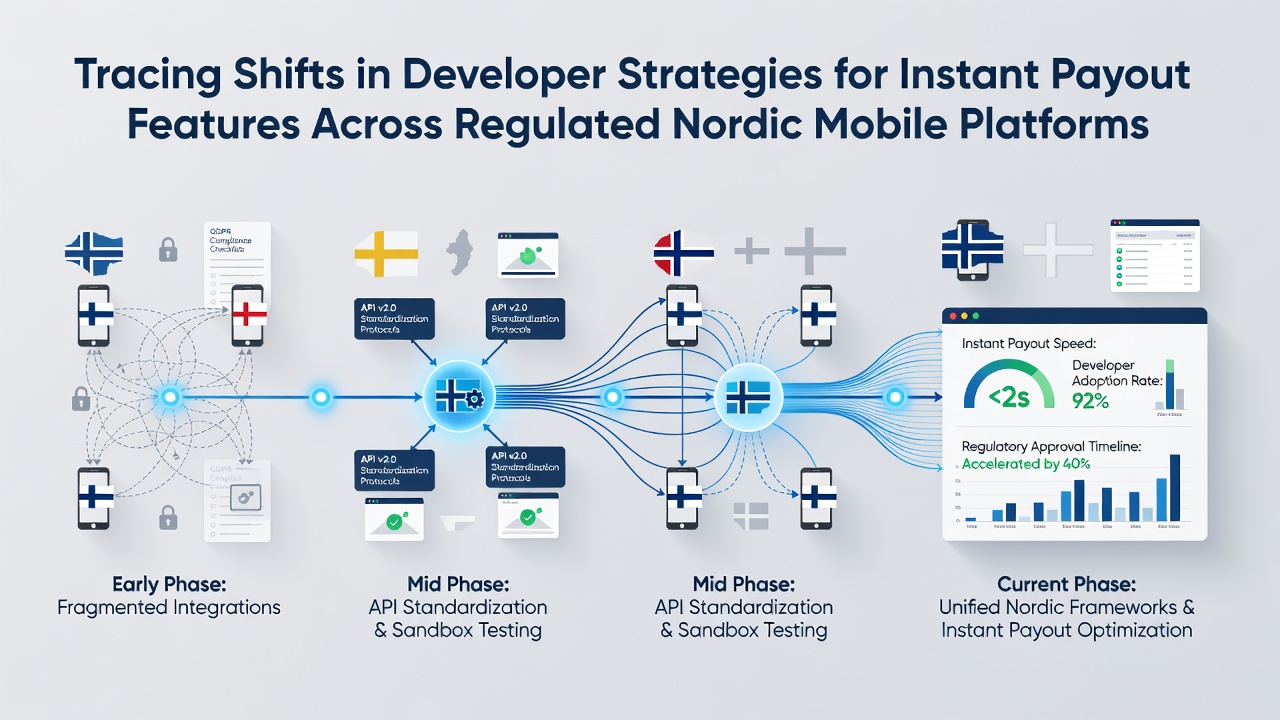
Tracing Shifts in Developer Strategies for Instant Payout Features Across Regulated Nordic Mobile Platforms
Regulated mobile platforms across the Nordic region have seen developers adjust their approaches to instant payout features as user expectations and technical capabilities evolve together, and data from national oversight bodies track these changes through 2026. Developers working on apps in Sweden, Denmark, Norway, and Finland now prioritize seamless integration of real-time transfer systems such as bank APIs and mobile wallets, whereas earlier versions relied on batch processing that delayed fund releases by hours or days. This adjustment reflects broader patterns in mobile infrastructure where security protocols and transaction speeds must align with regulatory standards that govern licensed operators.
Foundations of Payout Technology in Nordic Markets
Initial implementations of instant payouts on Nordic platforms drew from established banking networks that already supported rapid transfers, and developers built upon these foundations by embedding modules for services like Swish in Sweden or Vipps in Norway. Research indicates that by early 2025 most regulated apps had incorporated at least one instant method, yet compatibility issues across devices prompted further refinements in code architecture. Those who examined platform logs from that period note a steady rise in transaction volumes handled through mobile-optimized pathways, while security layers added encryption checks at each step of the payout sequence.
One development team working on a Danish-licensed platform documented how they replaced legacy payment gateways with modular APIs that allowed quicker updates when new banking partners joined the ecosystem, and this change reduced average processing times without compromising compliance checks. Figures reveal that similar adaptations appeared across multiple operators during the same timeframe, driven by the need to maintain functionality on both iOS and Android environments where operating system updates occasionally disrupted older integrations.
Strategic Adjustments Observed Through Mid-2026
By September 2026 developers had begun shifting toward hybrid models that combined instant bank transfers with fallback options for users whose accounts required additional verification steps, and this approach addressed variability in user banking setups across the region. Data from the Norwegian Gaming Authority shows increased adoption of these layered systems among licensed mobile platforms, whereas earlier strategies focused solely on speed now incorporate risk-scoring algorithms that flag transactions in real time. Observers note that such algorithms draw from machine learning models trained on historical payout patterns, which helps platforms stay within regulatory boundaries while delivering funds promptly.
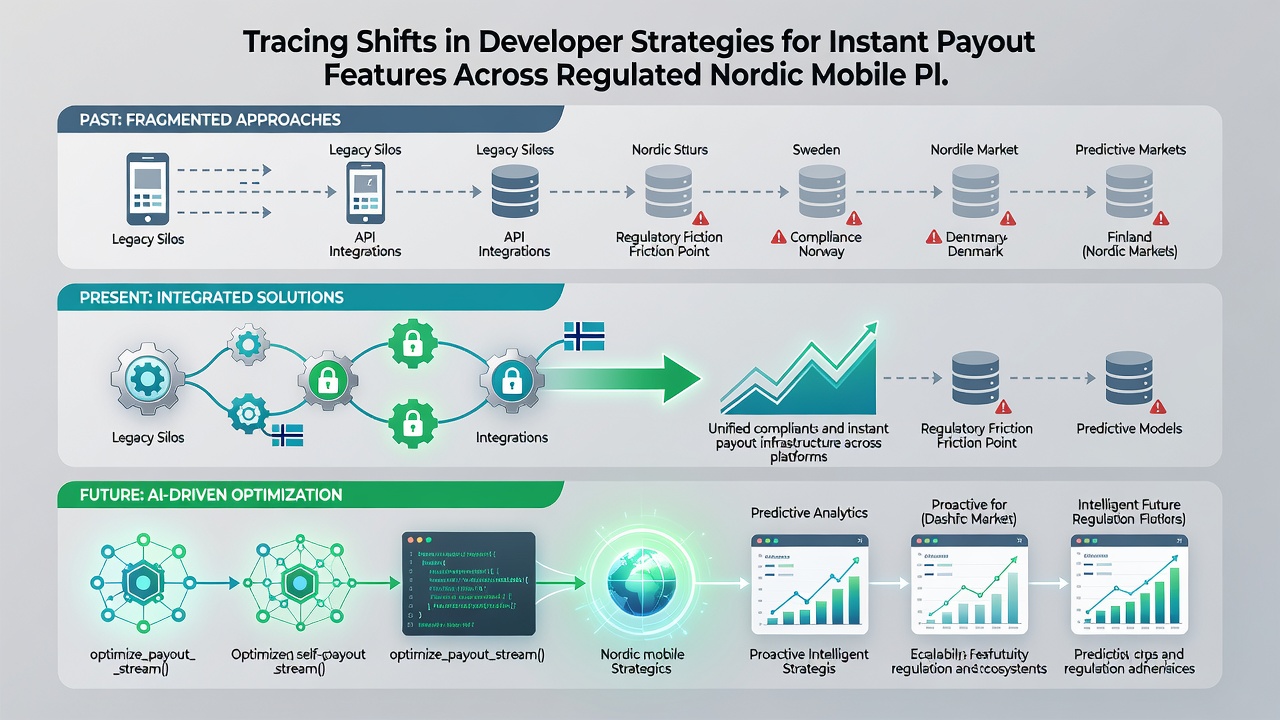
Another notable change involves the move to cloud-based processing environments that scale during peak usage periods, and developers cite improved reliability when handling simultaneous payout requests from large user bases. A study released by the University of Oslo examined how these environments support compliance logging that regulators require, and the findings highlight reduced downtime compared with on-premise servers used in previous years. Those responsible for platform maintenance often report that the transition also simplified testing across different device models common in Nordic markets.
Regional Variations and Technical Responses
Platforms operating under Finnish regulation have emphasized integration with local instant payment networks that favor direct account linkages, while Danish counterparts have explored partnerships with fintech providers to expand wallet options. According to statistics compiled by Lotteri- og stiftelsestilsynet, these choices correlate with higher completion rates for mobile-initiated transactions in each jurisdiction. Developers respond by maintaining separate code branches for region-specific features yet share core security frameworks that meet common EU data protection standards.
Cross-border operators face additional considerations when users move between countries, and teams have introduced geolocation checks that adjust payout flows accordingly without interrupting the user experience. Evidence suggests these measures emerged from iterative testing cycles conducted throughout 2025 and into 2026, where feedback from live environments guided refinements to both front-end interfaces and back-end verification sequences.
Conclusion
Developer strategies for instant payout features on regulated Nordic mobile platforms continue to adapt in response to technical demands and regulatory expectations, with documented shifts toward modular, secure, and scalable solutions evident through September 2026. National data sources track these developments across the region, and ongoing refinements indicate sustained focus on compatibility and processing efficiency.